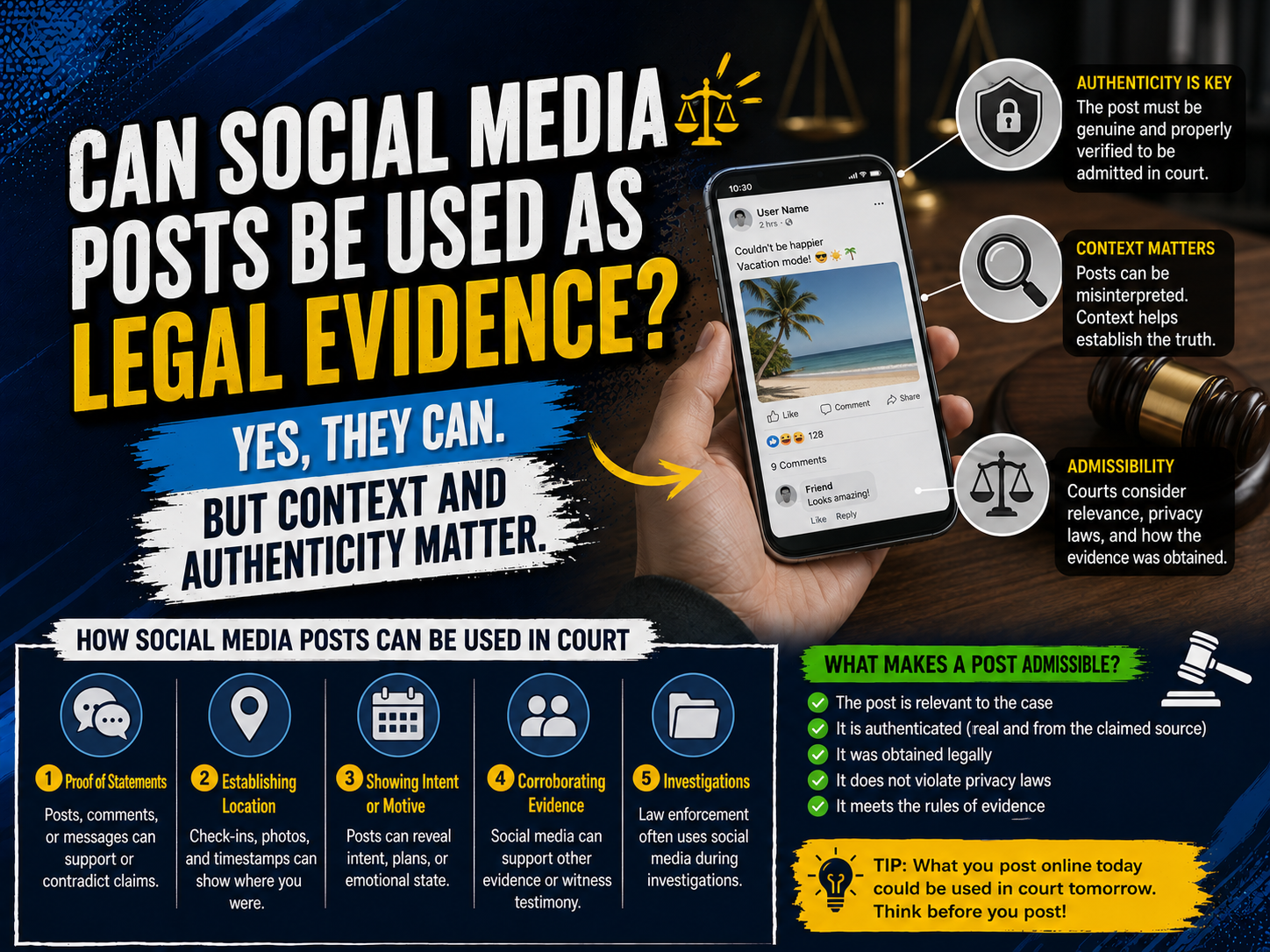

How are you? In today’s digital age, the question of whether social media posts can be utilized as legal evidence becomes increasingly relevant. Many people, including professionals and everyday users, are curious about how their online expressions may hold weight in a legal setting. Understanding this can not only protect your rights but also guide you on how to communicate online effectively.
Tabel of Content
- Definition of Legal Evidence
- Social Media in Law
- Case Studies on Social Media Posts
- Admissibility of Social Media Evidence
- Privacy Concerns Regarding Social Media
- Best Practices for Social Media Use
- Challenges in Using Social Media as Evidence
- Court Views on Social Media Submissions
- Emerging Trends in Legal Evidence
- Conclusion and Future Implications
Now that you have an overview of what we will discuss, feel free to continue reading to delve deeper into the complexities surrounding social media posts in the legal realm. Understanding how your online activities can impact potential legal situations is vital for anyone navigating today’s standards. Let’s explore further!“
Definition of Legal Evidence
Legal evidence refers to any material presented in a court of law that helps to prove or disprove a fact in a legal proceeding. This can include documents, witness testimonies, and, increasingly, digital content such as social media posts. With the growing prevalence of online interactions, questions arise about the reliability and admissibility of such posts in legal contexts.
For social media posts to be considered valid legal evidence, they must meet certain criteria. The content generally needs to be authentic, relevant to the case, and not obtained through illegal means. Moreover, the party presenting the evidence must establish a clear connection between the post and the matter in question.
In recent years, courts have increasingly recognized the potential of social media evidence. However, issues regarding privacy, consent, and the ability to alter digital content remain significant concerns that can complicate its use in legal proceedings.
Social Media in Law
As we navigate the digital age, social media has become an integral aspect of daily life, influencing various fields, including law. A significant question arises: Can social media posts be used as legal evidence? In many jurisdictions, the answer is increasingly becoming yes. Courts are increasingly recognizing the relevance of social media content in legal proceedings. This recognition raises important questions about the reliability and admissibility of such evidence.
Legal Admissibility of Social Media Evidence
The admissibility of social media evidence often depends on multiple factors, including the platform’s privacy settings and the authenticity of the posts. For instance, courts typically evaluate whether the content was shared publicly or if it was protected by privacy measures. A key factor that courts consider is the chain of custody of the digital evidence. This process involves demonstrating that the evidence has not been altered or tampered with, which is crucial for maintaining its validity in court.
Comparative Understanding
| Aspect | Traditional Evidence | Social Media Evidence |
|---|---|---|
| Authenticity | Typically easier to establish | Needs verification of account ownership and content integrity |
| Accessibility | Usually requires formal channels | Can be easily accessed but may involve privacy concerns |
| Public Perception | Generally trusted | Can be viewed skeptically due to potential for manipulation |
Case Studies on Social Media Posts: Can Social Media Posts Be Used as Legal Evidence?
The advent of social media has transformed the landscape of communication, and it has also raised pertinent questions regarding its implications in legal proceedings. Social media posts, once viewed merely as personal expressions, are now increasingly recognized as potential legal evidence. In various legal cases, courts have begun to accept tweets, Facebook posts, and other online content as significant evidence that can support or refute claims made during trial. This evolution indicates a need for legal professionals to understand how to effectively use and challenge such evidence in court.
- Can social media posts be used in court?
- What types of cases benefit from social media evidence?
- How is the authenticity of a social media post verified?
- Are there risks in using social media evidence?
- What should people consider before posting anything online?
Admissibility of Social Media Evidence
Social media has transformed how individuals communicate, but its impact reaches beyond social interactions. In the legal realm, social media posts can serve as valuable evidence in courts. However, the admissibility of such evidence often hinges on various factors, including authenticity and relevance. Courts must ascertain whether a particular post truly reflects the views or actions of the individual, thereby ensuring that it meets the necessary legal standards.
Factors Affecting Admissibility
For a social media post to be considered admissible, it must fulfill certain criteria. The challenges include verifying the post’s authorship, establishing the context in which it was made, and demonstrating its relevance to the case at hand. These requirements underscore the importance of maintaining digital evidence standards, which can vary across jurisdictions.
Comparison With Traditional Evidence
| Aspect | Social Media Evidence | Traditional Evidence |
|---|---|---|
| Authenticity | Requires verification of the account and content | Often involves witness testimony or documented proof |
| Relevance | Must be directly connected to the case | Often broadly relevant but can be subjective |
| Accessibility | Widely available but can be fleeting | Typically stored in physical or formal records |
In conclusion, while social media evidence can be powerful, it comes with its own set of challenges. As the legal system continues to adapt to digital advancements, understanding how to effectively authenticate and present such evidence is crucial for its acceptance in court.
Privacy Concerns Regarding Social Media
The increasing usage of social media has raised significant privacy concerns, especially when it comes to the potential for social media posts to serve as legal evidence. The intersection of digital privacy and legal frameworks often creates a complex environment where individuals may not be fully aware of the implications of sharing personal information online. It is essential to understand both the legal ramifications and personal privacy considerations when posting on social media platforms.
- Social media posts can be considered public records.
- Privacy settings do not always guarantee protection from legal scrutiny.
- Users often underestimate the permanence of online content.
- Legal investigations may involve accessing private accounts.
- Employers may monitor employees’ social media for legal compliance.
- Courts can subpoena social media data during legal cases.
- Content shared in closed groups may still be subject to legal action.
Best Practices for Social Media Use on the Topic “Can Social Media Posts Be Used as Legal Evidence?”
In today’s digital age, social media plays a crucial role in communication and information sharing. However, it has also raised questions regarding its reliability as legal evidence. Courts have increasingly considered social media posts in various cases, highlighting the necessity for users to understand the implications of their online actions. To ensure that social media content is considered viable legal evidence, it is imperative to follow certain best practices that maintain the integrity and authenticity of the information shared.
- What constitutes a social media post as admissible evidence?For a social media post to be admissible, it typically must be relevant, material, and authenticated to ensure it genuinely originated from the source in question.
- Can deleted posts still be used in court?Yes, even deleted posts can be retrieved and used as evidence if they have been archived or saved before deletion.
- Is privacy setting important when it comes to legal evidence?Yes, privacy settings can affect whether a post is accessible, but once shared publicly, the information may be used in legal proceedings.
- How can I protect my social media content from being misused legally?Consider adjusting your privacy settings, being cautious about what you post, and understanding the permanence of online content.
- Do legal implications vary across different social media platforms?Yes, each platform may have different terms of service and privacy policies that impact how content can be treated in legal contexts.
Challenges in Using Social Media as Evidence
The use of social media posts as legal evidence presents a myriad of challenges. One significant concern is the authenticity of the content. Courts require verification that a post is genuine and has not been altered. This necessity for rigorous validation can complicate the presentation of social media content during legal proceedings.
Another challenge lies in privacy issues. With users often believing their posts are private, lawyers may face difficulties in obtaining consent for use in court. This raises ethical questions about consent and the right to privacy, which potentiate further complexities in forming a legal argument based on social media.
Finally, the context in which a social media post was made is crucial. Isolated comments can be misinterpreted when taken out of context. Therefore, legal teams must analyze the broader conversation surrounding a post to fully understand its meaning and relevance, emphasizing the need for a careful and thorough approach to evidence collection.
Court Views on Social Media Submissions
The use of social media posts as legal evidence has gained prominence in recent years, particularly as digital interactions become integral to daily life. Courts, in their analysis, often examine the authenticity, relevance, and context of the posts in question. As technology evolves, so does the legal framework surrounding these holdings.
1. Authenticity and Verification
Establishing authenticity is crucial in admitting social media content as evidence. Courts require that the source of the post is verifiable and that the information has not been tampered with. This often involves presenting metadata and witness testimony regarding the post’s origin.
2. Relevance and Context
Another significant factor is the relevance of the social media post to the case at hand. Courts assess whether the content directly pertains to the issues being litigated and whether it adds substantial weight to the claims made by either party.
3. Privacy Considerations
Privacy rights can complicate the use of social media evidence. Courts must balance the individual’s right to privacy against the public’s interest in a fair trial. This often involves determining whether the posts were publicly accessible or if they were shared in a private setting.
4. Precedent Cases
Several landmark cases have set precedents for the admissibility of social media posts. These cases explore how courts handle digital evidence and the implications for future legal proceedings.
| Understanding Social Media as Legal Evidence |
|---|
| 1. Digital footprints can be compelling evidence. |
| 2. Content must meet strict legal criteria. |
| 3. Legal interpretations are still developing. |
| 4. Jurisdiction matters in evidence admissibility. |
Emerging Trends in Legal Evidence
In recent years, the intersection of law and technology has led to significant developments in what constitutes legal evidence. Social media platforms are increasingly being considered as valid sources of evidence in legal proceedings. As more people use platforms like Facebook, Twitter, and Instagram to share thoughts, opinions, and experiences, these posts can provide critical insight into various legal cases. It is essential to understand the implications of this trend, as legal professionals must navigate the complexities of authenticity and relevance when assessing social media content.
One of the primary challenges in utilizing social media as legal evidence revolves around issues of privacy and public access. While some posts may be publicly available and can be readily admitted in court, others may fall under privacy protections that limit their admissibility. This distinction raises questions about the ethical use of social media content, and attorneys must ensure that the information gathered complies with legal and ethical standards. Understanding how social media posts can impact court cases is a growing field of legal study.
Conclusion and Future Implications
In conclusion, the role of social media posts as legal evidence is becoming increasingly significant in today’s digital age. Courts have begun to recognize the value of these posts, acknowledging their potential to provide crucial insights into cases. As social media continues to evolve, the legal system must adapt to embrace this new form of evidence, ensuring that it is both permissible and relevant in a court of law.
Looking ahead, the implications of using social media as evidence could reshape legal practices. Lawyers and legal professionals may need to develop new strategies for gathering, preserving, and presenting social media content in a way that meets the evidentiary standards. Additionally, as privacy concerns persist, it is essential to strike a balance between the right to privacy and the need for transparency in legal proceedings.“The integration of social media evidence into legal practices poses both challenges and opportunities for the justice system.”
Ultimately, as society becomes increasingly interconnected, the influence of social media on legal matters is likely to grow. For legal practitioners, staying informed about developments in this area will be key to effectively representing clients and navigating the complexities of modern litigation.
Until next time, we hope you find our articles insightful and beneficial. Thank you!



Leave a Comment